


This post includes prompts and resources for therapeutic use of the arts. Feel free to skip ahead. A Life Less Miserable is a free newsletter/blog about mental health, particularly premenstrual disorders, trauma, and neurodivergence. If you enjoy this content, consider leaving a one-time tip.
I came into my master’s in Expressive Arts Therapy with almost no art background. I’d done some collage and visual journaling, watched videos on color theory, and retained nothing. I can’t draw. I definitely can’t sculpt. I got into the program partly because it was the first of its kind in Bangkok and didn’t require the 500 formal arts-education hours that an equivalent degree in Israel would.
So when I designed my thesis research on the relationship between childhood emotional maltreatment and premenstrual disorders, drawing felt like a useful add-on at best. I asked participants to draw both their childhood experiences and their premenstrual ones, mostly to access what words might not reach.
I wasn’t prepared for how powerful the drawings would be.
That’s the thing about expressive arts: it’s not about making good art. It’s about making contact with something internal. And it turns out that for premenstrual experiences specifically — embodied, cyclical, often hard to articulate — that contact can mean something.
I’d been planning to write about dance and movement therapy for ADHD. There’s already a lot written on art therapy and trauma. But I hadn’t expected to find anything on art and premenstrual disorders. As it turns out, there’s more there than I thought.
There isn’t much research into psychological interventions for premenstrual disorders in general. There’s a bit on CBT12 (and a meta-analysis that found that “For both cognitive-behavioral interventions and serotonergic antidepressants, efficacy in treatment of PMS was found to not be satisfactory.”3), a model for DBT4.
Then I found that
A randomized controlled study of midwifery students found that art-based interventions implemented over eight weeks significantly reduced PMS symptoms compared to usual coping strategies (Çitil & Canbay, 2024)5.
How can the arts help with premenstrual disorders?
Art therapies are generally divided into music therapy, [visual] art therapy, dance/movement therapy, drama therapy, psychodrama, and bibliotherapy (reading and writing). Expressive Arts Therapy is multimodel.
Of course, art can be therapeutic even if you do it alone, which I recommend. Doing art therapy with a therapist is a different experience. Not only is there a person there to guide you and give you prompts you may not have thought of yourself, but good therapy is also largely about the relationship with the therapist. Sharing your art (movement, etc) with a therapist is vulnerable. It can be scary, it can be beautiful, it can be [literally] messy. Both can be extremely valuable!

Accessing what’s underneath
Studies show heightened access to negative affect, intrusive imagery6, and social threat signals7 in the luteal phase. This can plausibly feel like being more “in touch” with underlying feelings, more aware of unresolved issues or relational tensions, and a stronger need to protect psychological boundaries (alone time, saying no).
Mary McDonald wrote a thesis on using art and sandtray therapy from a Jungian perspective to address PMDD symptoms, demonstrating how creative modalities can facilitate engagement with unconscious material and symbolic representations of premenstrual experiences. This depth psychology approach aligns with her theoretical positioning of PMDD symptoms as “symbolic messages” requiring integration rather than elimination, suggesting that creative expression may serve not only as a therapeutic intervention but as a pathway to deeper understanding of the meaning embedded within premenstrual experiences.8
Interrupting the spiral
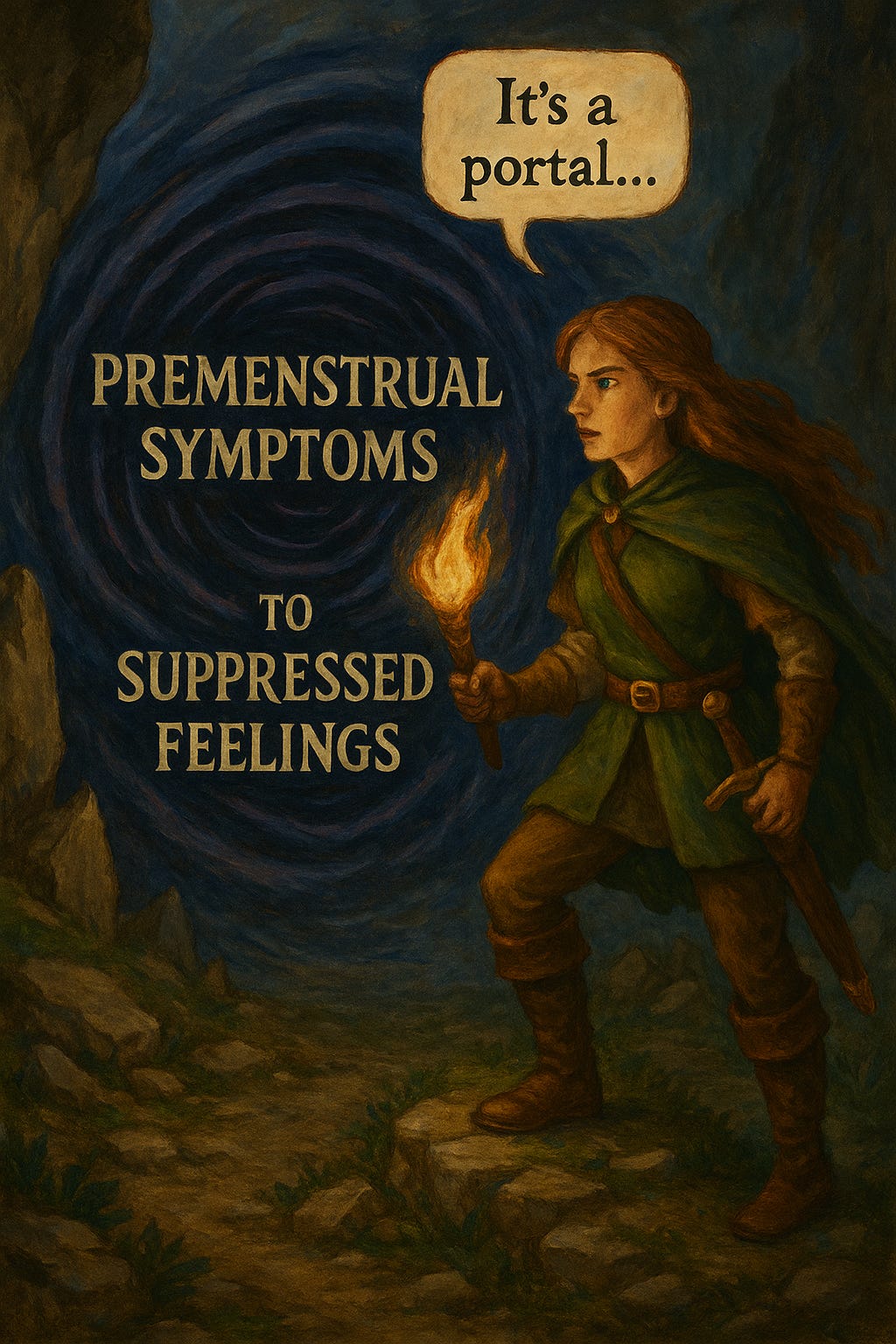
Rumination is one of the more exhausting features of the luteal phase. The same thought, the same conflict, the same unresolved thing. The harder you try to think your way out of it, the tighter the loop gets. In my study, it showed up as lying in bed with thoughts piling up, or through images of spirals to represent cognitive or emotional spiraling.
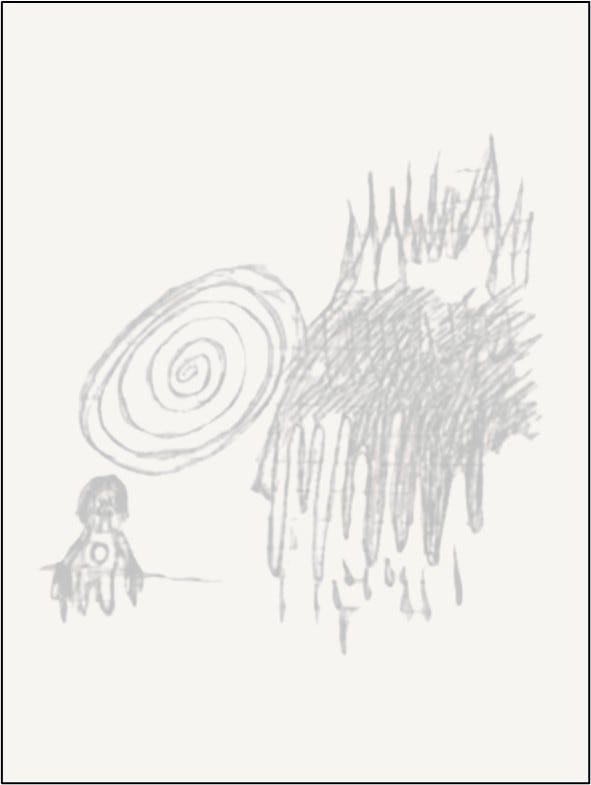
Art doesn’t solve the problem, but it does something subtler: it gives the spiral somewhere to go. Externalizing what’s inside by putting it on paper or into movement or sound interrupts the loop just enough to create some distance. You’re no longer inside the thought; you’re looking at a representation of it. That shift, small as it sounds, can be enough to loosen its grip.
This is also why relatively uncontrolled materials work better here than precise ones. Oil pastels, paint, loose movement — anything that resists being too neat. The point isn’t to make something coherent out of the chaos. Sometimes it’s just to get it out of your head and onto something external.
Bridging body and emotion
A PMDD diagnosis focuses on emotional and behavioral symptoms, but most people who have it will tell you the experience is just as physical. Fatigue, bloating, breast tenderness, migraines, acne — the body is very much involved. And yet the physical and emotional are so intertwined in PMDs that it can be hard to know where one ends and the other begins.
This is part of what makes art a useful tool here. Language tends to separate things — we describe physical symptoms in one sentence and emotional ones in another. Art doesn’t make that distinction. Research has found that people with somatic conditions who engaged in art therapy showed improvements in both physical symptoms and mood, with their artwork often symbolically depicting personal issues, without that being the explicit intention.9 A study on women with breast cancer found that self-figure drawings can reveal shifts in body perception and self-image that are difficult to articulate verbally10.
For conditions like PMDs, where so much is happening beneath the surface of what’s easy to say, that kind of expression can be its own form of relief.
Making something out of the negative
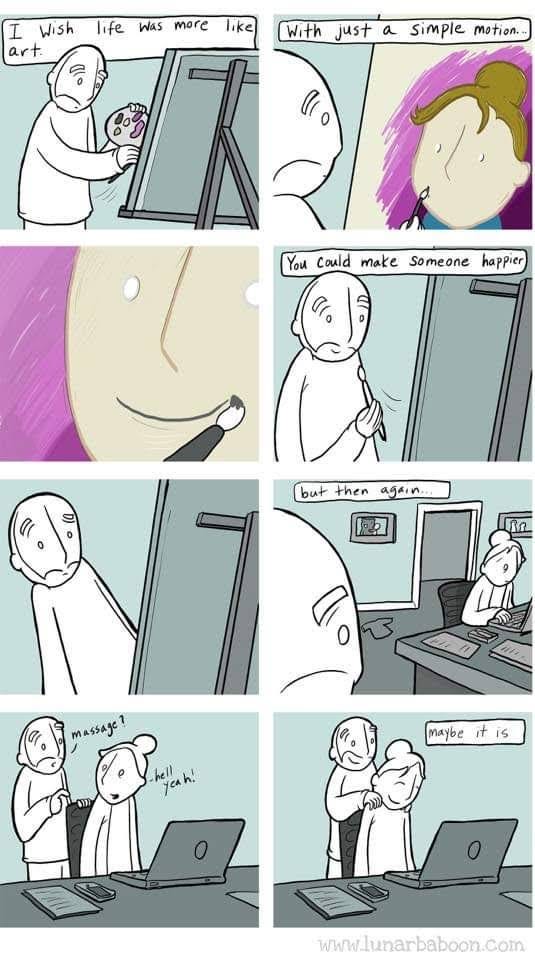
Art can help us make something beautiful or meaningful out of our pain. Whether it’s making someone else feel seen or just a moment of beauty, using the arts can be a form of sublimation.
Finding your voice
Women with premenstrual disorders were found to be high in self-silencing — the pattern of suppressing feelings and needs to avoid conflict or maintain relationships111213.
It’s worth noting that self-silencing isn’t the same as being quiet or passive. You can be outspoken about ideas, even confrontational when needed, and still have difficulty recognizing or communicating your own emotional experience.
This is part of why the arts can be particularly well-suited to this population. They offer a way to find your voice before you have the words for it.
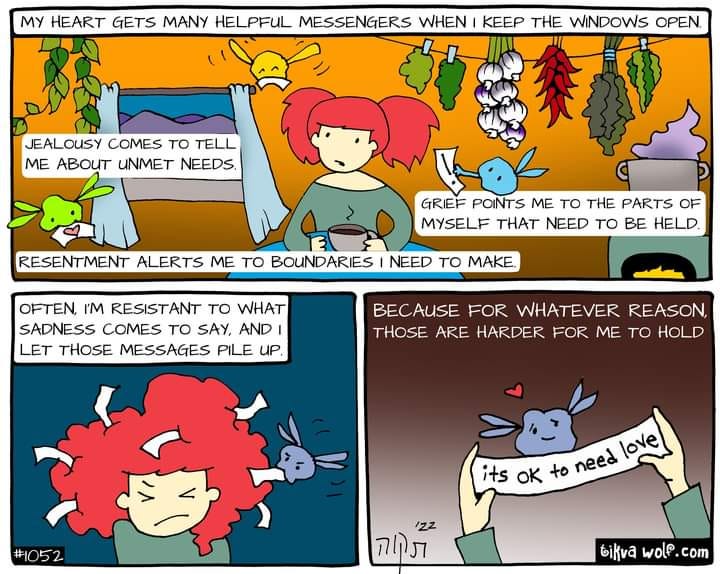
With visual art, you notice what you’re drawn to — colors, shapes, images that surface before your internal editor has a chance to intervene. With writing and journaling, the page becomes a space where you can say things you haven’t yet figured out how to say to anyone else. Movement and dance can bypass the need for language entirely, letting the body express what the mind is still processing. And voice work — whether that’s singing, toning, or even just humming — can be surprisingly direct in loosening what’s been held in.
None of this requires skill. What it requires is a willingness to let something out without immediately judging it. For people who have learned, often early, that their feelings are too much or not welcome, that’s not a small thing.
Processing trauma and old beliefs
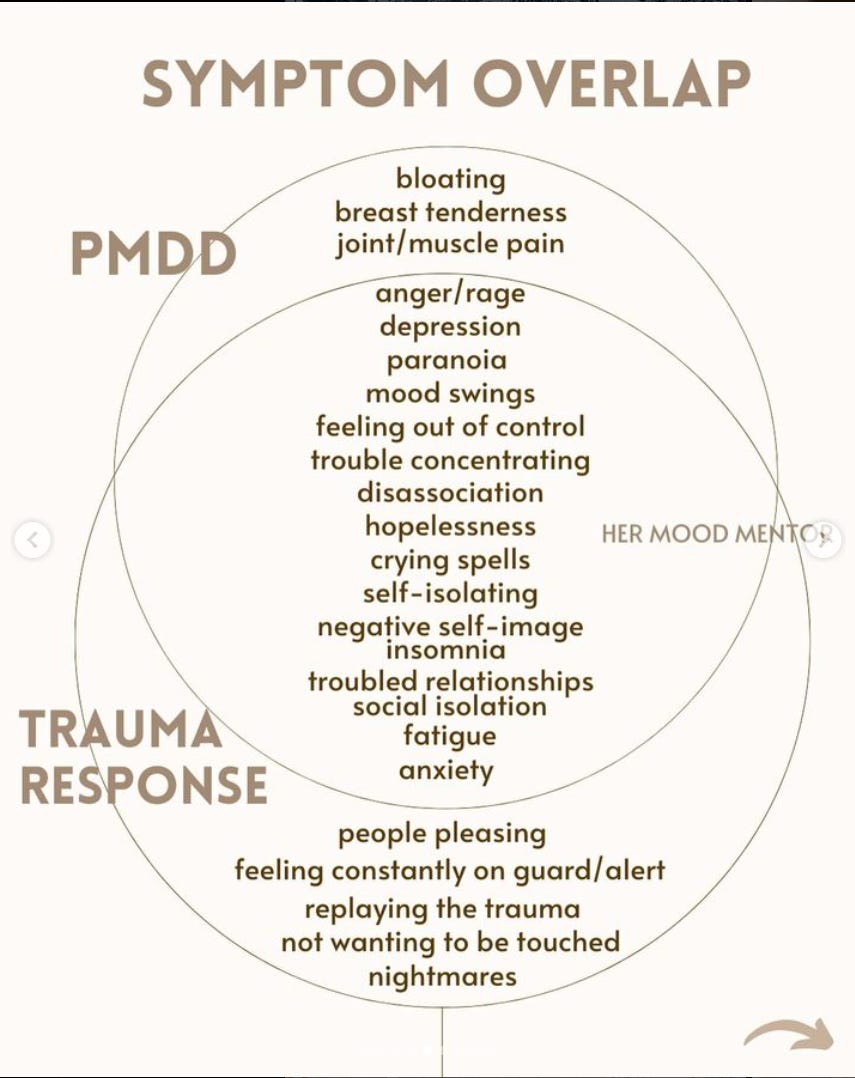
Research has found correlations between premenstrual disorders and PTSD, as well as histories of emotional maltreatment and sexual trauma. This isn’t incidental. Trauma shapes how we relate to our bodies, our emotions, and ourselves. Those patterns don’t disappear when the luteal phase arrives. If anything, they tend to surface more loudly.
One of the ways trauma does this is through the beliefs it leaves behind. Experiences of emotional abuse in particular can generate deeply internalized messages: that your feelings are too much, that you’re difficult, that your needs aren’t legitimate. In the luteal phase, when emotional defenses are lower, these voices can feel less like old beliefs and more like the absolute truth.
This is where art can do something that talking sometimes can’t. It offers a way to externalize what’s internal: to give a shape, an image, or a form to something that usually just lives inside you as a feeling or a voice. Once it’s outside you, you can look at it differently. Research on art therapy with adults who have trauma histories has found that the creative process allowed people to explore their experiences from new perspectives, leading to increased emotional awareness and reduced trauma symptoms.14
You don’t have to be in art therapy to use this. Something as simple as drawing or collaging what your inner critic looks like can create enough distance to loosen its grip. The goal isn’t to silence it but to stop identifying with it as strongly.

Trying it at home
You don’t need art supplies, a therapist, or any prior experience to start using the arts for your luteal phase. You need something to express with (a pen, a phone with music, your body) and a willingness not to judge what comes out.
Art therapies are generally divided into distinct disciplines — music therapy, visual art, dance and movement, drama, and bibliotherapy (reading and writing). But in practice, especially at home, these bleed into each other. You put on a song and find yourself moving. You write something and then want to draw it. You dance something out, then reach for a journal. Following that thread from one form to another is part of the process, not a deviation from it.
Some places to start:
Visual art
When your emotions feel out of control, reach for something uncontrolled. Oil pastels are great for this. If your thoughts are spiraling, catch a few sentences or words that stand out and write them down or represent them symbolically.
Draw or collage what your inner critic looks like. Give it a face, a character, whatever feels right.
Create something that represents your luteal and follicular selves. What would it look like if they met?
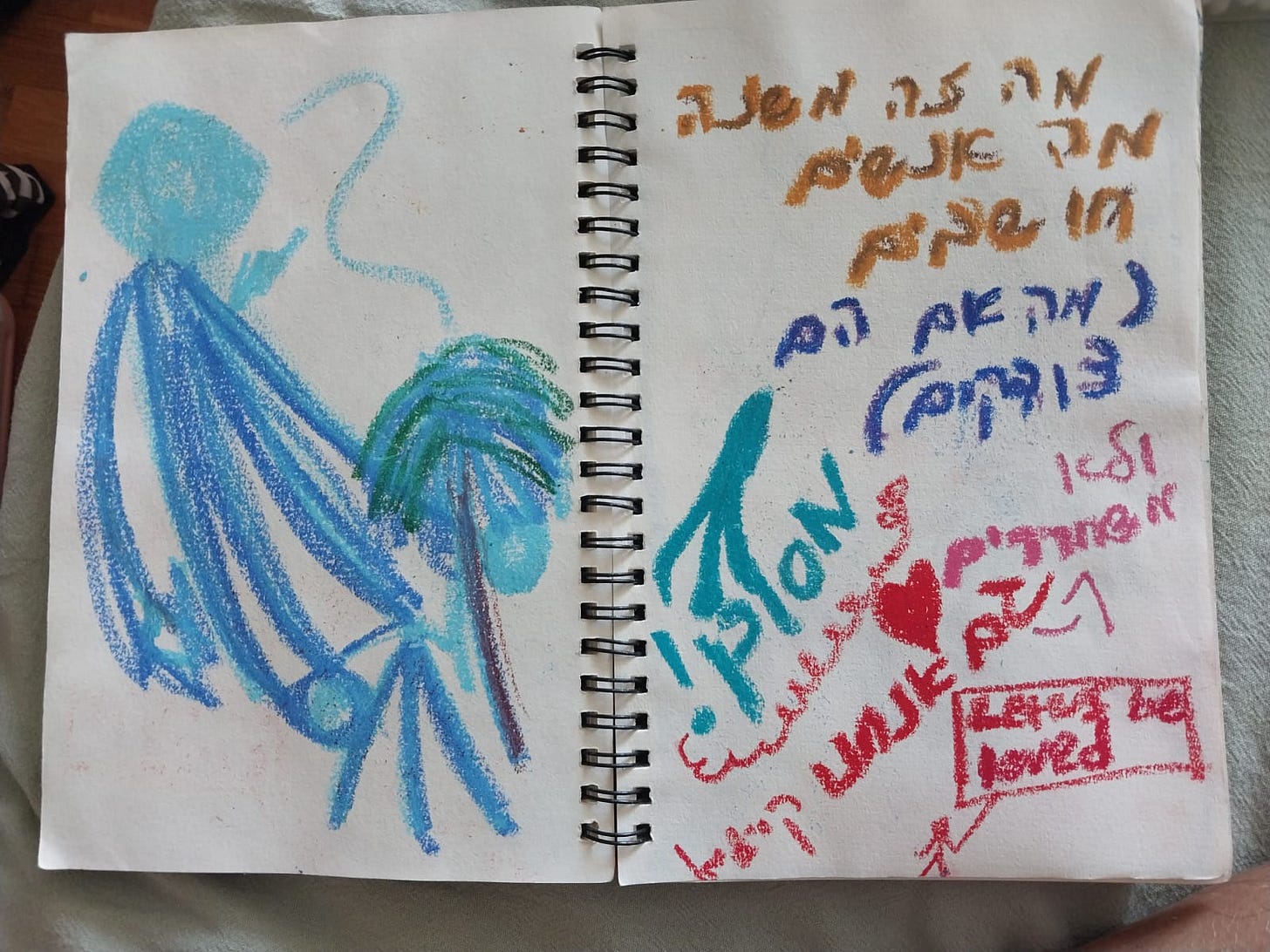
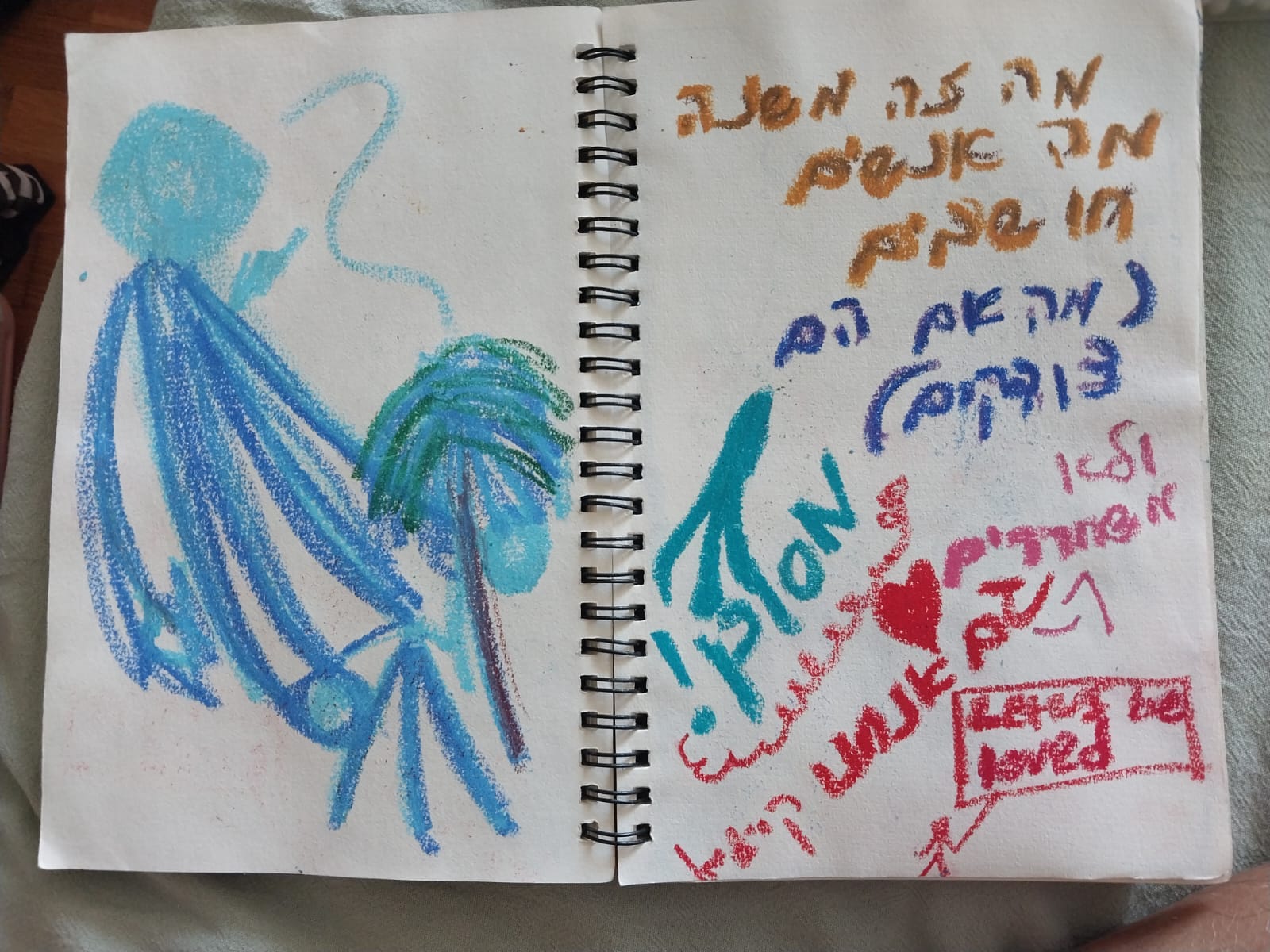
Oil pastels. You’re not making something pretty. You’re getting something out.
Writing
Keep a quotes journal specifically for your luteal phase — things that validate your ambivalence or give you something to hold onto when your own thoughts aren’t trustworthy.
Write a letter from your luteal self to your follicular self, or vice versa.
Music and movement
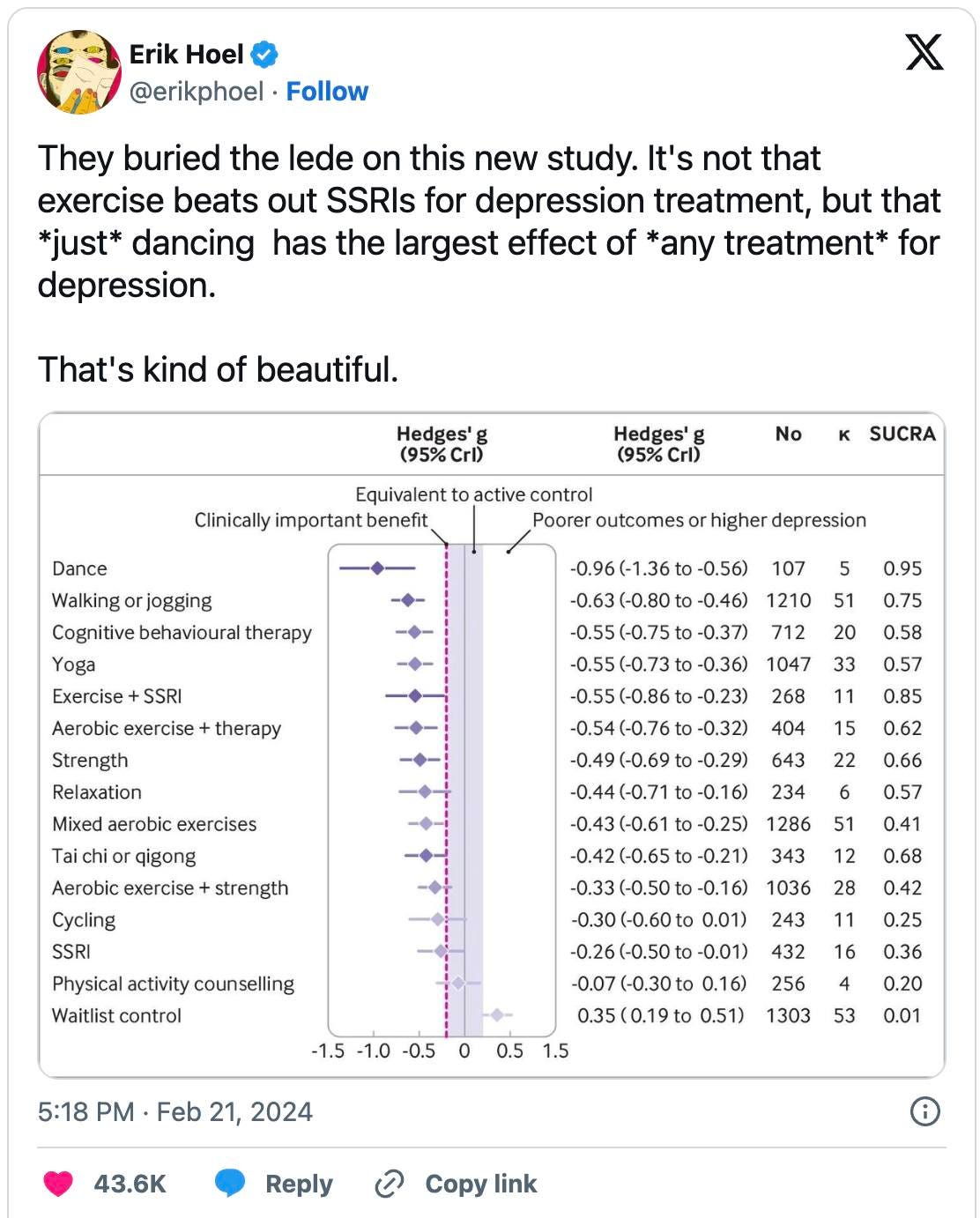
Build a playlist that matches where you are emotionally, not where you want to be. I have a premenstrual vibes playlist that I return to most cycles. Some songs are about certain emotions or themes (anger, anxiety, rage against the patriarchy) while others are more uplifting.
Put on some guided dance meditations and move however your body wants. Links down below.
Broader prompts for any modality
Create something that represents your relationship to anger. What would it look like if that relationship changed?
Create something about your relationship with your body, or your femininity, or gender — whatever feels most charged right now.
Create something that represents your premenstrual experience as a whole.
Want to do this together?
I’ve been thinking about sharing prompts like these more regularly — maybe a dedicated post each cycle, maybe just folded into articles like this one. I’m not sure yet what I can commit to, honestly. I’m job hunting, and I’ve learned not to overpromise.
But if this is something you’d want — a prompt, a loose theme, a space to share what comes up — let me know in the comments. If a few of you are interested, I’ll figure something out.
Further reading and watching

Hunter, Myra S, et al. “Medical (Fluoxetine) and Psychological (Cognitive–Behavioural Therapy) Treatment for Premenstrual Dysphoric Disorder.” Journal of Psychosomatic Research, vol. 53, no. 3, Sept. 2002, pp. 811–817, https://doi.org/10.1016/s0022-3999(02)00338-0.
Lustyk, M.K.B., Gerrish, W.G., Shaver, S. et al. Cognitive-behavioral therapy for premenstrual syndrome and premenstrual dysphoric disorder: a systematic review. Arch Womens Ment Health 12, 85–96 (2009). https://doi.org/10.1007/s00737-009-0052-y
Kleinstäuber, M., Witthöft, M. & Hiller, W. Cognitive-Behavioral and Pharmacological Interventions for Premenstrual Syndrome or Premenstrual Dysphoric Disorder: A Meta-Analysis. J Clin Psychol Med Settings 19, 308–319 (2012). https://doi.org/10.1007/s10880-012-9299-y
Oliveri, A., Muir, S., Mu, E., & Kulkarni, J. (2025). Advancing psychological interventions for premenstrual dysphoric disorder: A dialectical behaviour therapy–informed treatment model. Australian & New Zealand Journal of Psychiatry, 59(, 670-673. https://doi.org/10.1177/00048674251348370
Çitil, E. T., & Canbay, F. Ç. (2024). The Effect of Art on Premenstrual Syndrome Symptoms. Holistic Nursing Practice
“Identification of a Narrow Post-Ovulatory Window of Vulnerability to Distressing Involuntary Memories in Healthy Women.” Neurobiology of Learning and Memory, vol. 104, 1 Sept. 2013, pp. 32–38, www.sciencedirect.com/science/article/pii/S1074742713000506, https://doi.org/10.1016/j.nlm.2013.04.003.
Maner, Jon K., and Saul L. Miller. “Hormones and Social Monitoring: Menstrual Cycle Shifts in Progesterone Underlie Women’s Sensitivity to Social Information.” Evolution and Human Behavior, vol. 35, no. 1, Jan. 2014, pp. 9–16, https://doi.org/10.1016/j.evolhumbehav.2013.09.001
McDonald, M. (2023). Exploration of the unconscious processes in premenstrual dysphoric disorder [Master’s thesis]. Pacifica Graduate Institute.
Plecity, D. M., Danner-Weinberger, A., Szkura, L., & von Wietersheim, J. (2009). [The effects of art therapy on the somatic and emotional situation of the patients--a quantitative and qualitative analysis]. Psychotherapy, Psychosomatics, Medical Psychology, 59(9-10), 364-369. https://doi.org/10.1055/s-2008-1067573
Barel-Shoshani, Z. A., & Kreitler, S. (2017). Changes in self-perception following breast cancer as expressed in self-figure drawings: Present-past. The Arts in Psychotherapy, 55, 136-145. https://doi.org/https://doi.org/10.1016/j.aip.2017.05.001
Perz, J., & Ussher, J. M. (2006). Women’s experience of premenstrual syndrome: a case of silencing the self. Journal of Reproductive and Infant Psychology, 24(4), 289-303. https://doi.org/10.1080/02646830600973883
Ussher, J. (2003). The ongoing silencing of women in families: An analysis and rethinking of premenstrual syndrome and therapy. Journal of Family Therapy, 25, 388-405. https://doi.org/10.1111/1467-6427.00257
Chrisler, J. C., Gorman, J. A., & Streckfuss, L. (2014). Self-Silencing, Perfectionism, Dualistic Discourse, Loss of Control, and the Experience of Premenstrual Syndrome. Women’s Reproductive Health, 1(2), 138–152. https://doi.org/10.1080/23293691.2014.966597
Becker, C.-L. J. (2015). Integrating Art Into Group Treatment for Adults With Post-Traumatic Stress Disorder From Childhood Sexual Abuse: A Pilot Study. Art Therapy, 32(4), 190-196. https://doi.org/10.1080/07421656.2015.1091643
Beautiful, saved for later.
I love this article. Fantastic ideas, and I’m interested in the articles you cited as well. I didn’t know there was so much scholarship on PMDD and art interventions, but it makes so much sense that Art would help! Thanks for sharing and for the prompts you offer.